If you’ve ever had to sign a legal document, apply for power of attorney, or submit paperwork to a government office, you may have come across the term “notary.” But what does it actually mean, and why does it matter so much in Qatar’s legal system?
In simple terms, notarisation is the process of getting a document officially verified and certified by an authorised notary. It confirms that a signature is genuine, that a copy matches the original, or that a declaration was made willingly and truthfully. Without this step, many documents simply won’t be accepted by banks, courts, embassies, or government departments in Qatar.
What Does a Notary Actually Do?
A notary public acts as a neutral, legally authorised witness. Their job is to confirm identity, verify signatures, and make sure documents are signed knowingly and without pressure. Once a notary stamps or certifies a paper, it carries legal weight — meaning institutions can trust it without needing to independently verify every detail themselves.
This is exactly why notarised documents move faster through legal, banking, and government processes than unverified ones.
Why Legal Documents Require Notarization
Qatar’s legal and administrative systems rely heavily on documented proof. A signature alone isn’t always enough — authorities need confirmation that the signature is authentic and that the person signing understood what they were agreeing to. This is where notarisation becomes essential, especially for:
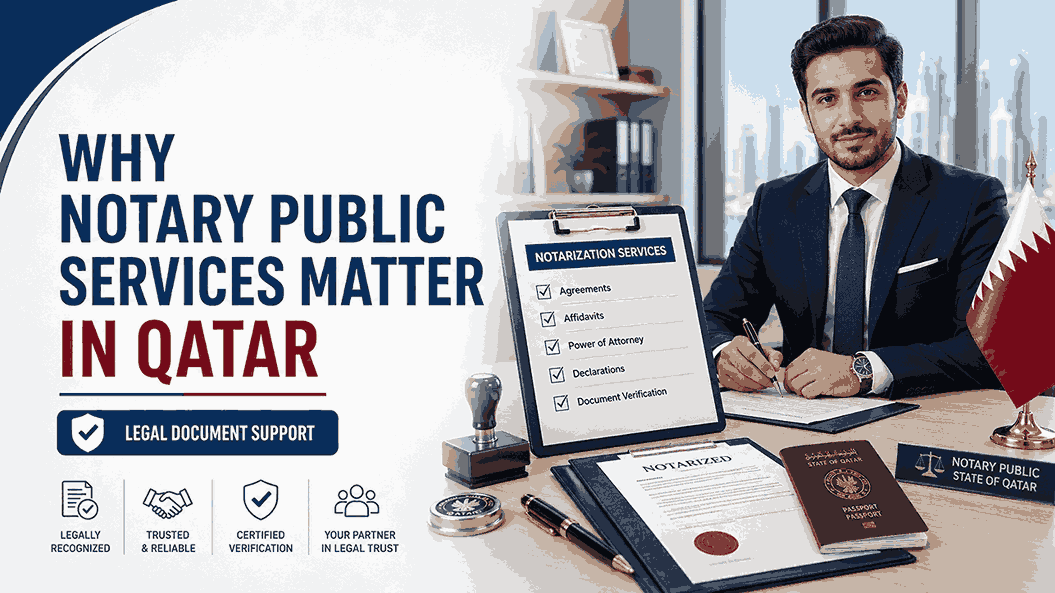
Power of Attorney — When you’re authorising someone else to act on your behalf, whether for property, banking, or family matters, this document has serious legal consequences. It must be notarised to be considered valid and enforceable.
Affidavits and Declarations — Sworn statements, whether for a name change, a legal claim, or a formal declaration, need notarisation to hold up as credible evidence.
Agreements and Contracts — Business contracts, property transfers, and commercial agreements often require notarised signatures so that all parties are legally protected if a dispute arises later.
True Copy Attestation — Sometimes you don’t need the original document verified but a copy of it — for example, submitting a copy of your passport or ID for a bank loan application. A notary confirms the copy is an exact match of the original.
Common Mistakes People Make
Many people run into avoidable problems simply because they don’t fully understand the notarisation process. A few common ones include:
- Assuming a photocopy is enough — without notarisation, a copy has no legal standing on its own.
- Signing documents before checking requirements — some documents need to be signed in front of the notary, not beforehand.
- Using outdated formats — a Power of Attorney or affidavit that doesn’t follow the correct legal wording can get rejected later, even after it’s notarized.
- Leaving it too late — notarization can usually be done same-day, but urgent visa, banking, or court deadlines are often missed simply because people wait too long to start the process.
When Should You Actually Use a Notary?
As a general guide, you’ll likely need notarization if you’re dealing with:
- Property transactions or transfers, in Qatar or abroad
- Power of Attorney for banking, business, or family matters
- Bank loan documentation, especially true copy attestation for overseas banks
- Legal declarations or sworn affidavits
- Business contracts and commercial agreements
- Documents being submitted to embassies or foreign institutions
If you’re ever unsure whether a document needs notarization, it’s worth checking before you submit it — a rejected document because of a missing notary stamp can cost you time you don’t have, especially with visa or banking deadlines.
Getting It Done Right, the First Time
Understanding why notarization matters is the first step — getting it done correctly is the part that actually protects you. A properly notarized document saves you from rejections, delays, and the frustration of redoing paperwork under time pressure.
If you’re in Qatar and need documents notarized — whether it’s a Power of Attorney, an affidavit, a business contract, or a true copy attestation — our team can guide you through the correct process from start to finish, with same-day service available.